

Awareness, Hearing Loss Matters, Media Releases
WORLD HEARING DAY 2026: NCPD CALLS FOR UNIVERSAL NEONATAL HEARING SCREENING TO GIVE EVERY SOUTH AFRICAN CHILD A FIGHTING CHANCE
Feb
“From Communities to Classrooms: Hearing Care for All Children”
On World Hearing Day 2026, the National Council of and for Persons with Disabilities (NCPD), together with the Independent Connected Audiology Network (iCAN), is sounding a clear call to South Africa: every newborn deserves a hearing screening. It is not a luxury. It is a doorway to human connection, language, learning, and a full life.
This year, the World Health Organization (WHO) marks the day under the theme “From Communities to Classrooms: Hearing Care for All Children” – a campaign that zeroes in on two urgent priorities: preventing avoidable childhood hearing loss and ensuring early identification and care for children living with ear or hearing problems. Schools and communities are the natural entry points to reach children, parents, and teachers. By weaving hearing care into school health and child health programmes, we can help children hear, learn, and succeed.
The numbers are sobering. Around 90 million children aged 5 to 19 live with hearing loss globally. Over 60% of childhood hearing loss is preventable through simple, cost-effective public health measures. Yet too many children slip through the cracks – unscreened, undiagnosed, and unsupported – with devastating consequences for their development, education, and future opportunities.
Why Neonatal Hearing Screening Matters
While the WHO campaign casts a wide net across school-age hearing care, the NCPD has chosen to spotlight neonatal hearing screening – the testing of newborns – as South Africa’s most critical starting point. The reasoning is straightforward: the earlier we know, the better a child’s chances.
As audiologist Dr Natalie Buttress of iCAN explains, a baby’s auditory system begins developing in the womb. By 22 to 25 weeks of gestation, an unborn child can already detect sound. After birth, the auditory brain undergoes a period of extraordinary growth, with nerve fibres knitting into pathways that will carry sensory information to the brain for recognition and interpretation. This development continues for roughly 12 years before the auditory brain fully matures.
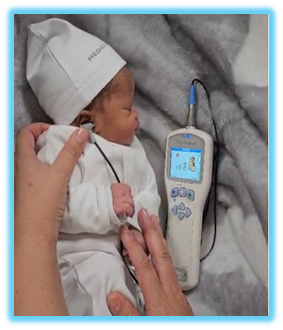
“Knowing early about your baby’s hearing can make a world of difference to your baby’s future,” says Dr Buttress. Audiologists can assess a new-born’s hearing as early as 24 hours after birth. A neonatal screening is not a full diagnosis but rather a quick, painless process that identifies possible hearing loss. Most babies sleep right through it.
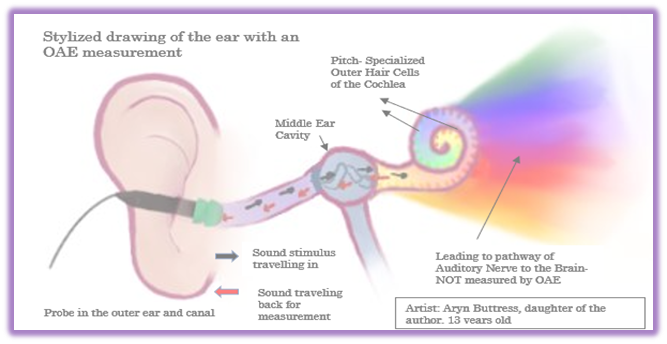
The screening uses Otoacoustic Emissions (OAEs) – gentle sounds presented to the ear to assess reflected responses from the inner ear – and, where needed, the Auditory Steady State Response (ASSR) test, which estimates hearing levels along the pathway to the brain. Neither procedure causes any discomfort.
Early Intervention Changes Lives
A normal screening result is a good start, but hearing should be tested annually through the first five years of life. If a problem is confirmed, early intervention – guided by audiologists, ENT specialists, and paediatricians – can prevent a larger impact on learning and development. Despite hearing loss, a child’s environmental safety, language development, reading, and spelling can still be supported for lifelong learning success.
A Call to Act
The NCPD and iCAN warmly encourage all prospective and new parents to prioritise early hearing screening for their newborns. We also call on government, healthcare providers, and communities to integrate systematic screening and early intervention into child health plans – because no child should be left behind due to a hearing problem that could have been caught early.
To find your closest iCAN audiologist, visit www.independentaudiologists.co.za. For more on World Hearing Day 2026 and the WHO campaign resources, visit www.who.int/campaigns/world-hearing-day/2026.
Pingback: hello world