

Campaign, G20-D20, Impact, News articles
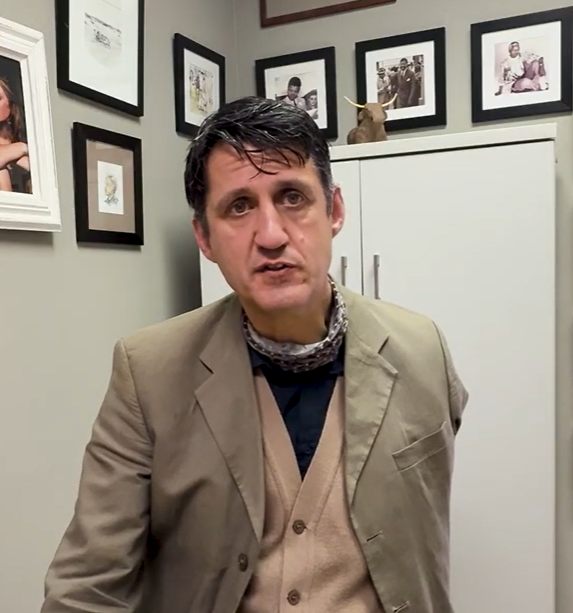
MEET THE DISABILITY-20 LEADERSHIP: Andrew Hofmeyr
28
Oct
Oct
From Educator to Advocate: Building Inclusive Futures
Andrew Hofmeyr’s journey from mathematics teacher to disability rights leader spans more than two decades of transformative work in South Africa’s most underserved communities. As Project Lead for the National Council of and for Persons with Disabilities (NCPD) in the Disability-20 initiative, he orchestrates collaborations that convert lived experiences into influential policy recommendations, ensuring the voices of persons with disabilities resonate in both national and global decision-making forums.
Thirty-one years ago, a road accident left Andrew with severe physical impairment—an experience that fundamentally reshaped his understanding of accessibility, dignity, and human potential. Rather than allowing this to limit his vision, Andrew channelled his experience into a more profound commitment to creating educational environments where every learner, regardless of ability, can thrive. This personal journey grounds his professional expertise in an authentic understanding of the barriers persons with disabilities face daily.
Throughout his teaching career, Andrew co-founded the Ukuqonda Institute, where he pioneered curriculum innovation and teacher development. His practice, rooted in decades of rural education work, consistently prioritised equitable access, intellectual rigour, and learner autonomy. His passion for mathematics education manifested not only in classroom teaching but also in teacher training and textbook authorship—resources that continue to shape how mathematics is taught across South Africa.
Where the Work Happens: Rural Communities
Andrew’s commitment to inclusion extends far beyond policy documents and conference rooms. He spends significant time in some of South Africa’s most remote areas, particularly the Eastern Cape, Northern Cape, and Free State provinces—places where disability and exclusion are compounded by poverty, inadequate infrastructure, and limited access to basic services.
In these communities, Andrew does not arrive as a distant expert but as someone who understands struggle firsthand. He sits with families in their homes, listening to parents who’ve been told their children are “unteachable.” He visits schools where learners with disabilities have been relegated to corners of classrooms or kept at home entirely. He works alongside rural teachers who are passionate but under-resourced, helping them discover that inclusion isn’t about having perfect facilities—it’s about seeing every child’s potential and refusing to give up.
The work is often slow and painstaking. It involves navigating unpaved roads to reach isolated villages, conducting workshops in schools without electricity, and building trust in communities where promises have been made and broken before. But Andrew returns again and again, because he knows that genuine transformation happens not in Pretoria or Johannesburg, but in these rural spaces where children with disabilities have been invisible for too long.
His approach is deeply relational. He doesn’t impose solutions from above but works collaboratively with local leaders, educators, and families to co-create pathways forward. Whether helping a school adapt its physical space, training teachers in inclusive pedagogy, or connecting families to support services, Andrew’s rural work is characterised by patience, respect, and an unwavering belief that every child, in every corner of South Africa, deserves quality education.
Leadership in DISABILITY-20 and C20
When the NCPD embarked on establishing South Africa’s participation in the DISABILITY-20 initiative, Andrew accepted what many recognised as a mammoth undertaking. Working in partnership with Disabled People South Africa, he co-facilitates five of the twelve workstreams on disability matters that mirror G20 working groups, ensuring disability perspectives are woven into every aspect of global economic and social policy discussions.
Andrew’s vision extended beyond a single organisation. He dreamed of creating a truly collaborative platform that would bring together Disabled Persons Organisations, educationalists, sector leaders with lived experience, and research teams. This vision, shared by colleagues including Alex Msitshana, Lubabalo Mbeki, and Dr. Zukiswa Nzo, was rapidly transformed into a comprehensive implementation plan under his facilitation.
Beyond the DISABILITY-20, Andrew plays a pivotal role in the Civil Society 20 (C20) engagement group, particularly in education advocacy. The C20 brings together civil society organisations to ensure that the voices of ordinary citizens—not just governments and corporations—shape G20 decisions. Within this space, Andrew has become a leading voice for education reform, consistently pushing for policies that address not just access but genuine learning quality and inclusion.
His work in the C20’s education workstream connects his on-the-ground experience in rural schools with global policy conversations. When he speaks about education at C20 forums, he doesn’t rely on abstract statistics—he shares stories from the Eastern Cape, the Northern Cape, and the Free State. He talks about specific children, real teachers, and actual schools. This grounding in lived reality gives his advocacy an authenticity and urgency that resonates powerfully with both policymakers and fellow civil society actors.
Under his leadership, the D20 initiative has been positioned as central to South Africa’s G20 presidency process in 2025. Andrew’s approach is characterised by profound respect for collective wisdom—he recognises and celebrates each participant’s contributions, expressing genuine gratitude for the passion and energy stakeholders bring to this historic work. The gathered information, policy recommendations, and advocacy materials are what Andrew calls the “sector’s collective asset”—resources that will fuel disability rights advocacy for years to come.
Understanding the D20 Opportunity
The Disability-20 initiative represents a historic opportunity to ensure that persons with disabilities are not merely consulted but are central architects of global policy. Building on the groundwork laid during Brazil’s G20 presidency in 2024, South Africa’s 2025 presidency offers a critical moment to solidify the Disability-20 as a permanent engagement platform within the G20 architecture.
Andrew’s role involves coordinating five of the 12 thematic workstreams, which address everything from digital accessibility and economic inclusion to climate justice and healthcare access. Each workstream brings together experts, advocates, and persons with disabilities to identify policy gaps, develop evidence-based recommendations, and engage directly with G20 working groups and the broader C20 platform.
The Disability-20 aligns with South Africa’s G20 presidency theme of “Solidarity, Equality and Sustainability” by demonstrating that these values cannot be realised without the full inclusion and leadership of persons with disabilities.
A Vision Grounded in Community
Andrew Hofmeyr’s work is guided by an unwavering commitment to community partnerships and a profound belief that inclusive spaces emerge when every individual—especially young people and those historically marginalised—is genuinely seen, supported, and empowered toward self-realisation.
Whether facilitating high-level policy discussions in the Disability-20 and C20 or sitting with a family in a remote Free State village, Andrew brings the same values: deep listening, genuine respect, and an unshakeable conviction that every person has inherent worth and potential. His rural work keeps him grounded and honest—it’s impossible to make empty promises when you’re looking into the eyes of a mother who’s been fighting for her child’s right to education for years.
Through his leadership of the Disability-20 initiative, his contributions to the C20’s education advocacy, and his tireless work in rural communities across the Eastern Cape, Northern Cape, and Free State, Andrew continues to champion a future where disability is recognised not as a limitation but as an integral dimension of human diversity—one that enriches policy discussions, strengthens democratic processes, and ensures that global governance truly serves all members of society. His vision is of an education system, economic opportunities, and political participation designed from the ground up to include everyone and leave no one behind.