

Awareness, Eco Tourism, In the Media
A More Inclusive Coastline: New Beach Signs Help Visitors with Visual and Hearing Impairments
Oct
NCPD | Accessibility | Universal Design | Inclusive Tourism
South Africa’s coastline is becoming more accessible, thanks to an innovative initiative that is helping blind, visually impaired and hearing impaired visitors access coastal information more independently.
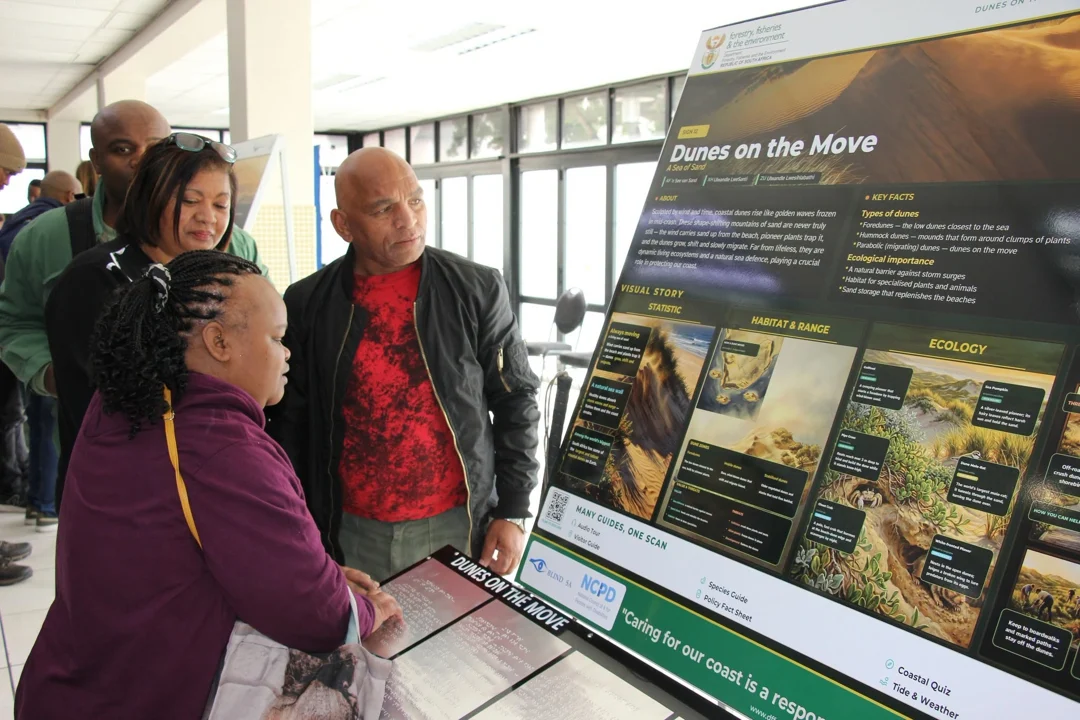
The Living Coast coastal interpretive signage project is demonstrating how Universal Design can transform the way all experience and interact with our natural environment. With prototypes introduced at Grotto East in Hermanus, the initiative builds on earlier Braille signage at Blaauwberg Nature Reserve and forms part of plans to install 97 signs stretching from the West Coast to northern KwaZulu-Natal.
The National Council of and for Persons with Disabilities (NCPD) has contributed accessibility expertise and consulting support to the Hermanus prototypes, helping demonstrate how thoughtful design and accessible technology can make coastal information available to a broader audience.
Breaking down barriers to coastal information
Traditional coastal signage relies primarily on visual information, creating barriers for visitors who are blind or visually impaired. Without alternative formats, visitors may struggle to access the same information about coastal environments, marine species, conservation and visitor safety as other members of the public.
The Living Coast project addresses these barriers by incorporating Braille and digital accessibility features, giving visitors alternative ways to explore and understand the information presented on the signs.
Importantly, the initiative also recognises that accessibility should not focus on one disability in isolation. By considering the needs of persons with both visual and hearing impairments, the project demonstrates how inclusive design can create a richer and more equitable experience for everyone.
Eight guides. One scan. More ways to explore.
Each sign features a single QR code connecting visitors to a mobile-friendly digital hub containing eight guides:
- Audio Tour: A narrated introduction to the coastal environment.
- Species Guide: Information about local species and biodiversity.
- Coastal Quiz: An interactive way to learn about the coast.
- Citizen Science: Opportunities to engage with coastal knowledge and observation.
- Visitor Guide: Useful information to support visitors.
- Policy Fact Sheet: Information about relevant coastal policies.
- Tide & Weather: Information relating to coastal conditions.
- Ocean & Coast Information System: Access to wider ocean and coastal information.
The digital platform expands the ways visitors can engage with coastal information, offering alternatives to relying solely on printed text and visual displays.
Explore the digital guides at Living Coast Guides.
What NCPD has to say: Accessibility in action
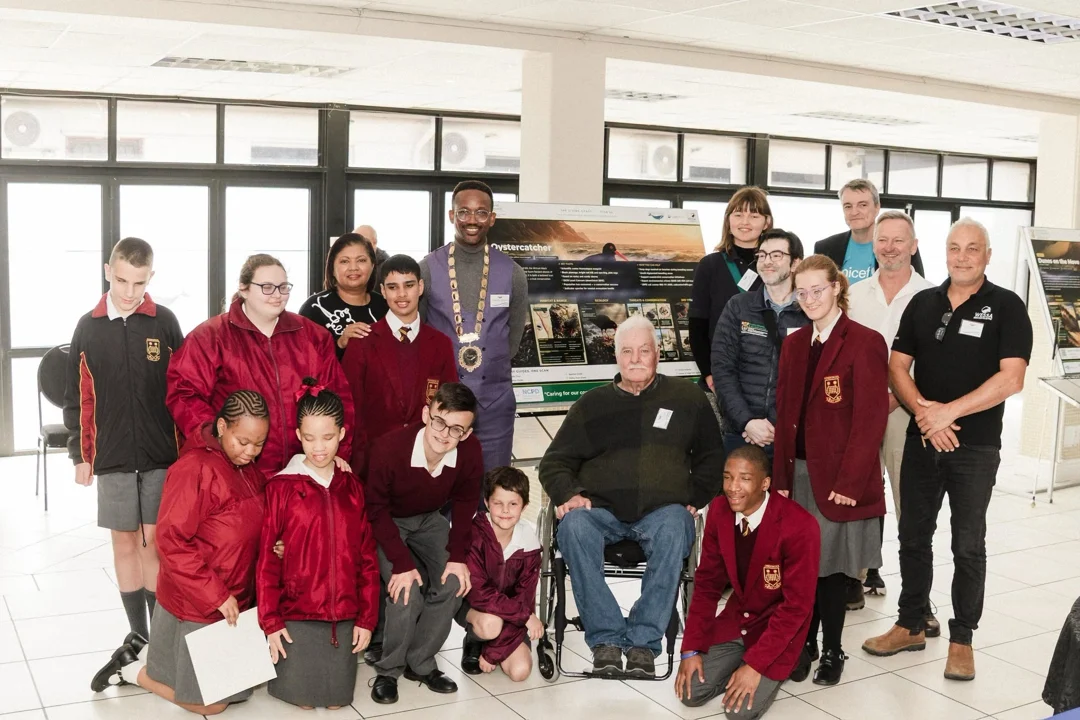
As part of its contribution to the project, Danie Marais, Senior Manager: Projects, Governance and UDA at NCPD shared insights into the importance of inclusive coastal signage and the difference accessible information can make.
- What accessibility barriers in conventional coastal signage is Living Coast specifically designed to address?
The original coastal signage boards had only visual information. This project made it possible for persons with Vision and Hearing Impairments to have the same experience as persons without disabilities. - Why was it important for the project to accommodate people with different disabilities, including people with hearing loss, rather than focusing only on visual accessibility?
Inclusion of Persons with Impairments are crucial, the project first started with the brail and QR Code for persons with Vision Impairments only, but then it was obvious that features could be included to make it accessible for persons with Hearing Impairments. Each board now carries a single “Eight guides, one scan” QR code that opens a mobile-friendly hub linking to eight digital guides: an Audio Tour (narrated), a Species Guide, a Coastal Quiz, Citizen Science, a Visitor Guide, a Policy Fact Sheet, Tide & Weather, and the Ocean & Coast Information System. Visit https://living-coast-guides.netlify.app This feature makes it able for persons with Vision Impairments and Hearing Impairments the opportunity to have the access the information as an abled bodied (Persons without disabilities). - What feedback has NCPD received from people with disabilities during the testing of the Hermanus prototypes, and has any of that feedback led to changes?
The feedback that NCPD received where all positive, and the persons that attended the opening was full of praise for what was achieved. - Can you share an example of a person with a disability whose experience of accessing coastal information illustrates why these changes are important?
Yes, a person with a Hearing Impairment had the opportunity to watch the video tour and be able to read the captions, understanding what the video was about. - What do you hope people will understand about accessibility when they see someone independently using a Living Coast sign?
This is a huge step forward in showing how Universal Design can be applied in a meaningful way that makes the coastal signage accessible to the broader population, not only persons with disabilities, and how Universal Design can be achieved at beaches, resorts, parks and other environments. - Anything else you’d like to add?
Currently the audio is available in English and Afrikaans, but isiXhosa and isiZulu digital versions are on the way. A big thank you to Ryan Peter, Director: Coastal Development and Coordination (DFFE) and Michael Denison Senior Programme Manager: Coastal – WESSA and all the other role players in making this project a success.
Building a more inclusive future for South Africa’s coastline
The Living Coast project is an encouraging example of what can be achieved when accessibility expertise, technology and collaboration come together.
By providing alternative ways to access information, the initiative helps challenge the assumption that public spaces and visitor experiences are designed for only one type of user. It also reinforces an important principle: accessibility should be considered from the beginning, rather than added as an afterthought.
For NCPD, initiatives like these demonstrate the value of Universal Design in creating environments that are more accessible, inclusive and welcoming to all.
An accessible coastline is a better coastline, one where everyone has the opportunity to explore, learn and connect with South Africa’s natural heritage.
Discover the guides: living-coast-guides.netlify.app
More News and Stories
News24 | Article
Read More → article link | article link
Cape Town News | Article
Read More → article link
Nova News | Article
Read More → article link
South Africa Today | Article
Read More → article link
Cape Town etc. | Article
Read More → article link