

Awareness, Events, In the Media
Disability Rights Awareness Month (DRAM) Launch and Awareness Walk 2026
Oct
Disability Rights Awareness Month (DRAM) Launch and Awareness Walk 2027 “Nothing About us Without Us” | 16 October 2026
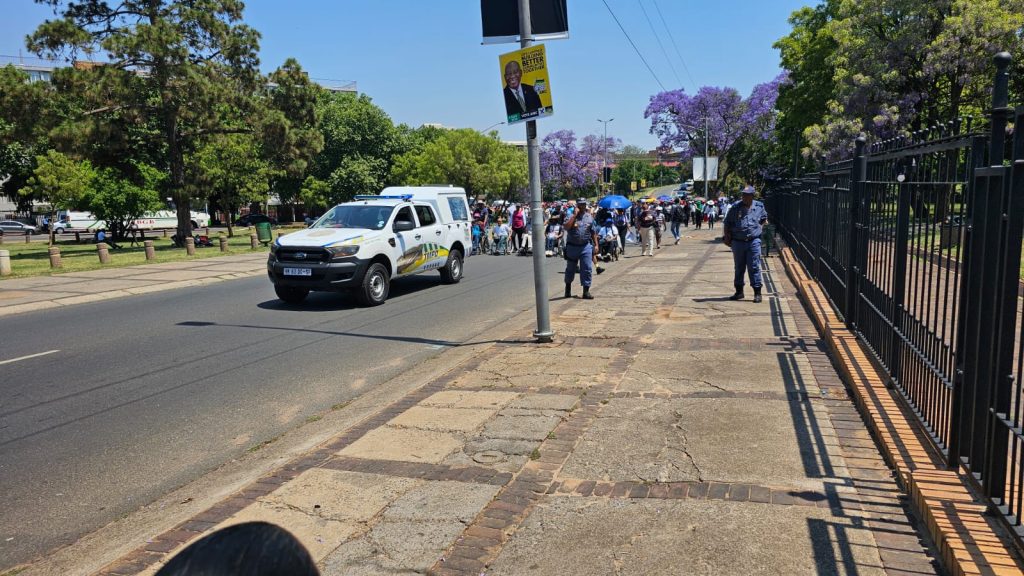
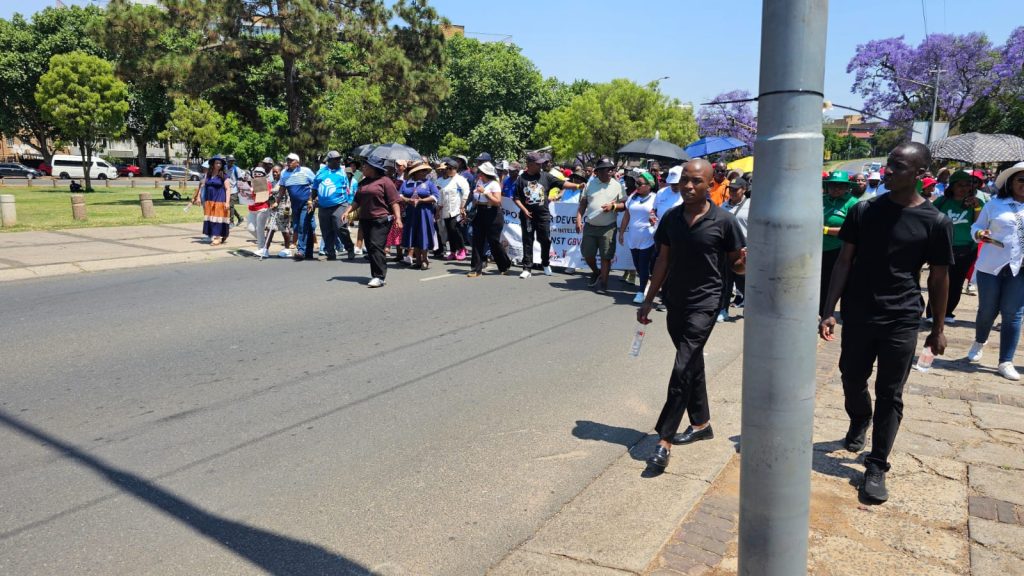
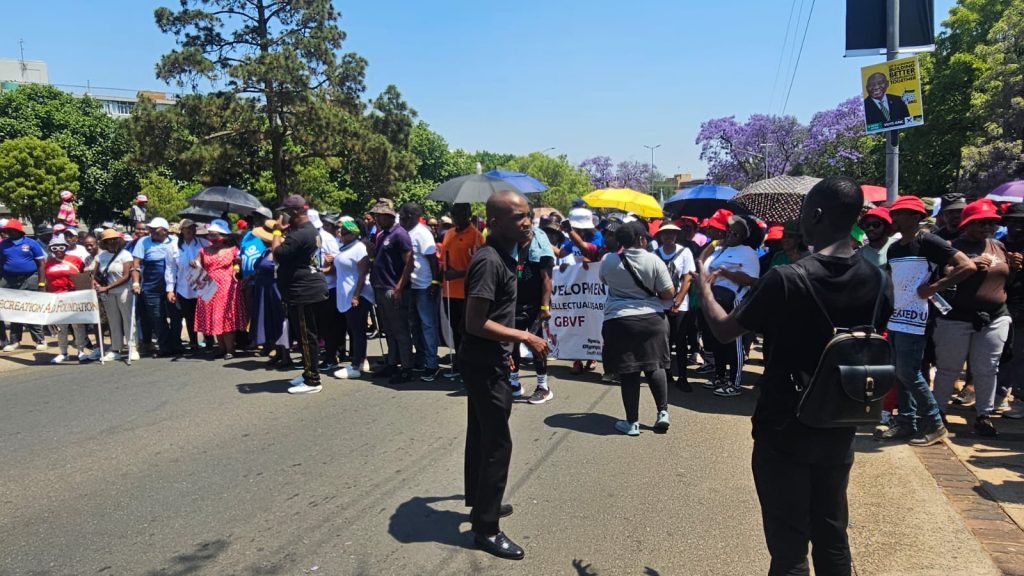
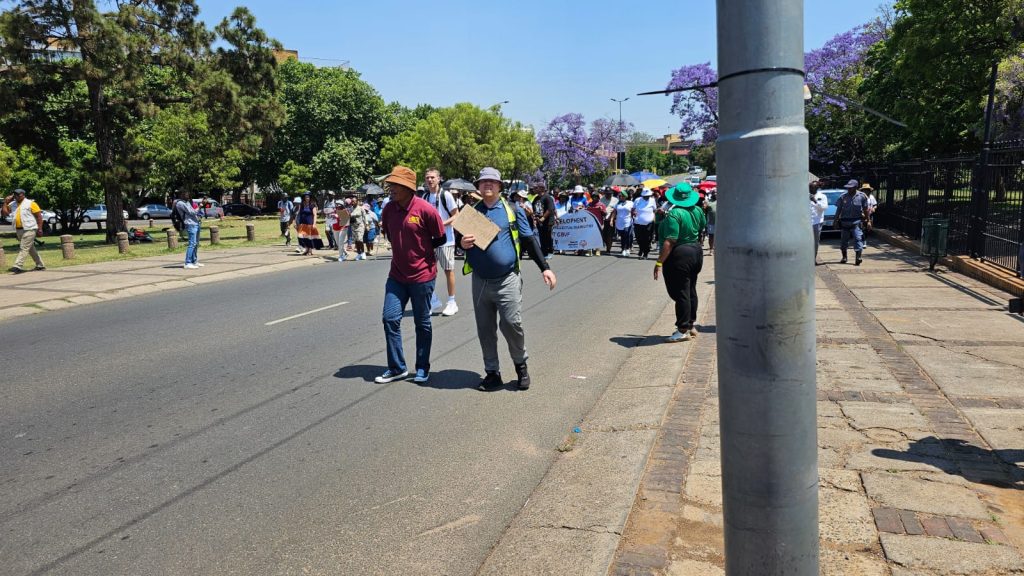
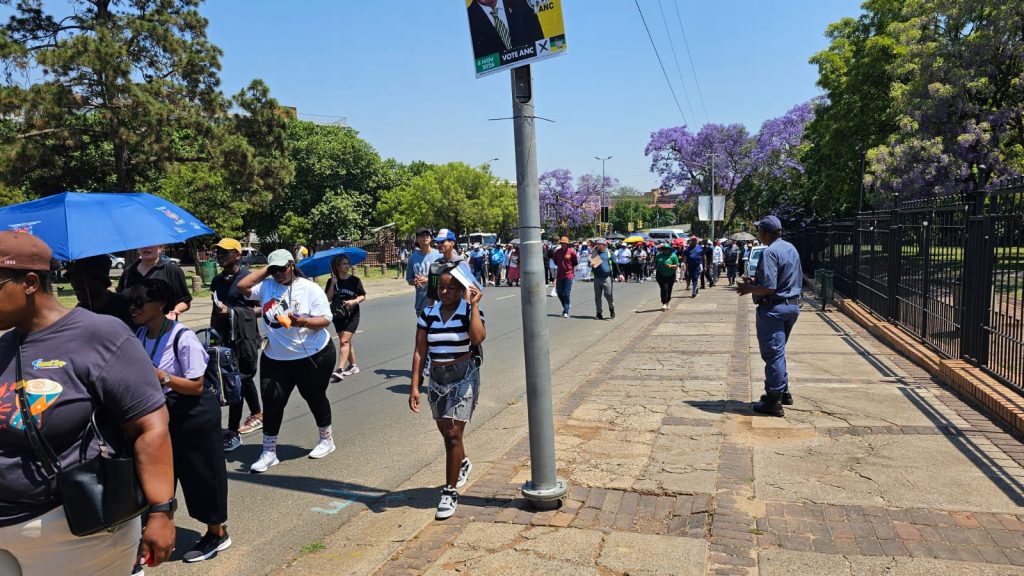
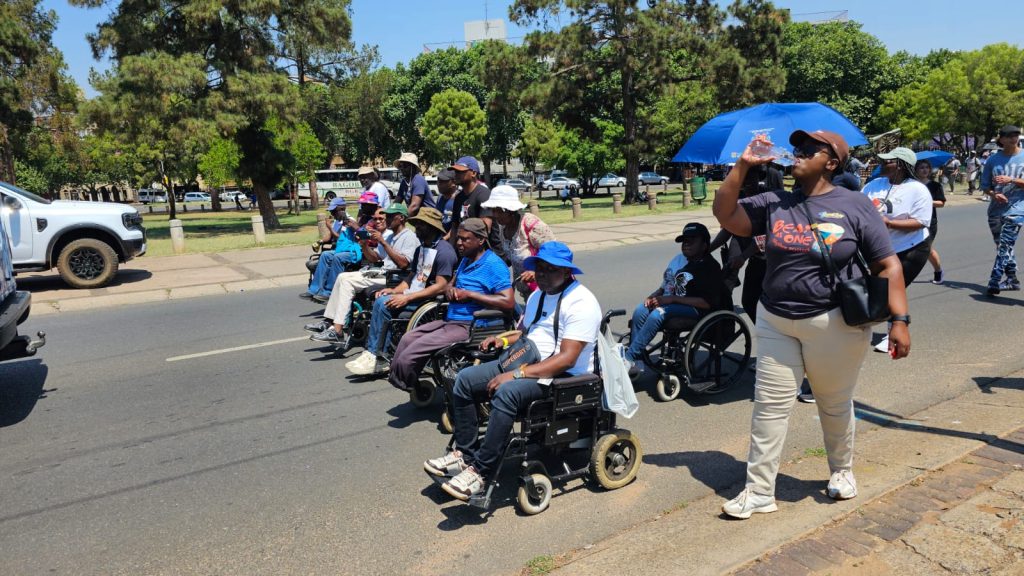
The National Council of and for Persons with Disabilities (NCPD) was proud to participate in the Disability Rights Awareness Month (DRAM) Launch and Awareness Walk on 16 October 2026, alongside the Department of Women, Youth and Persons with Disabilities (DWYPD) and fellow stakeholders including our Media Partner, SABC, to raise awareness of disability rights and advocate for a more inclusive South Africa.
Guided by the powerful principle “Nothing About Us Without Us,” the walk highlighted the importance of ensuring that persons with disabilities are meaningfully involved in the decisions, policies and initiatives. The voices, experiences and leadership must be central to building communities where everyone can participate, contribute and thrive.
We enjoyed being part of the march and the opportunity to take hands alongside fellow advocates, persons with disabilities and organisations committed to advancing disability rights. It was incredible seeing many participants wearing the Casual Day Beat as One t-shirts. The experience reinforced our belief that, through collaboration, shared commitment and meaningful partnerships, we can achieve far more together.
Building strategic partnerships for meaningful change
Disability Rights Awareness Month 2026 is observed from 3 November to 3 December under the theme “Creating Strategic Multisectoral Partnerships for a Disability-Inclusive Society.”
This theme highlights the need for government, business, civil society and organisations of and for persons with disabilities to work together to address the matters that continue to limit equal participation. While awareness is an important starting point, lasting change requires practical action, accountability and sustained collaboration.
Advancing inclusion across every sector
Throughout DRAM, weekly sub-themes will draw attention to key areas requiring collective action:
- 3–9 November: Investing in growth strategies to promote disability-inclusive job creation.
- 10–16 November: Amplifying the voices of children with disabilities and empowering them to self-advocate.
- 17–23 November: Unlocking digital opportunities for all by harnessing technology for disability inclusion.
- 24–30 November: Strengthening integrated disability approaches to advance women’s empowerment and gender equality.
These priorities remind us that disability inclusion is interconnected. Access to education, employment, technology, safety and leadership opportunities must be addressed together to support meaningful participation throughout every stage of life.
For NCPD, the message is clear: meaningful inclusion requires more than awareness events. It calls for ongoing partnerships, practical commitments and measurable progress towards protecting the rights of persons with disabilities.
Our participation in the march reaffirmed the value of taking hands for a common purpose. We extend our appreciation to DWYPD and all participating organisations and stakeholders who contributed to this important initiative.
Together, through collaboration, inclusion and shared responsibility, we can build a South Africa where persons with disabilities are heard, respected, represented and empowered to participate fully in society.
Nothing About Us Without Us.
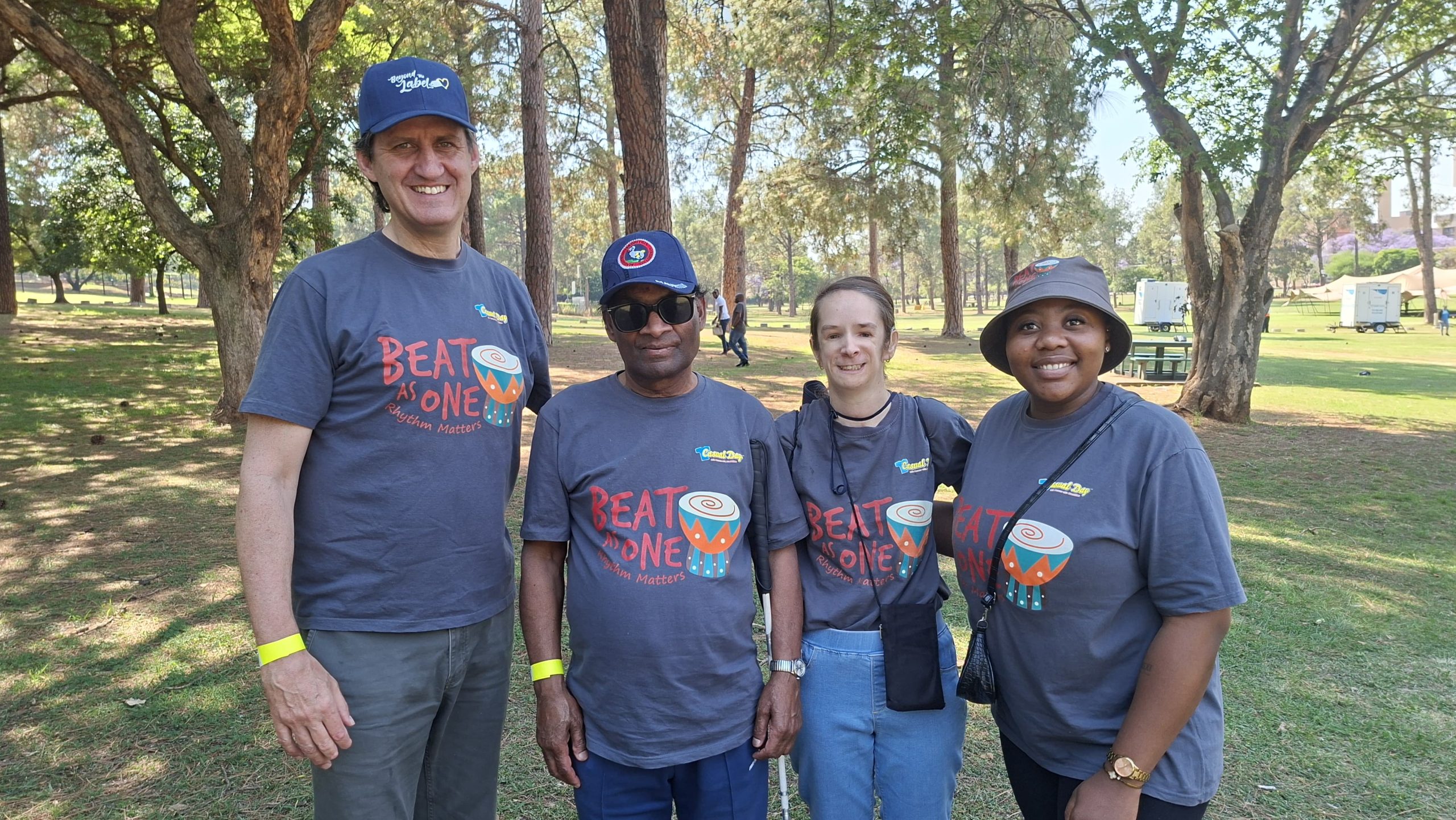
DRAM questions and answers from Dr Siva Moodley: Researcher, Advocacy and Disability-Rights Strategist and Andrew Hofmeyr: Project Lead: Special and Extraordinary Projects for the Rekord newspaper.
Rekord newspaper article: https://www.citizen.co.za/rekord/news-headlines/2026/10/20/niks-oor-ons-sonder-ons-eis-persone-met-gestremdhede/
- What does the theme “Nothing About Us Without Us” mean to your organisation, and why is it important for persons with disabilities to have a say in decisions that affect them?
Response Dr Siva Moodley: “Nothing about us, without us” is one of the most compelling slogans to emerge from the disability rights movement. The phrase succinctly conveys one of the movement’s central message that persons with disabilities can and will take decisions that affect their lives. This slogan is captured eloquently in one of the NCPD’s core values, which states that the organisation pledges never to speak on behalf of persons with disabilities, but to create opportunities and platforms for them to do so. If persons with disabilities are not integral to the decisions that affect them, the risk is that the outcomes of the decisions may not be responsive to their needs, aspirations and challenges.
Response Andrew Hofmeyr: The National Council of and for Persons with Disabilities (NCPD) is an organisation of and for persons with disabilities, so the people we serve also help lead us. To us, “Nothing About Us Without Us” means simple respect: don’t make decisions about our lives without asking us. Too often decisions are made for us in a boardroom somewhere, or in a policy discussion, and we only hear about them afterwards. Then you end up with a ramp so steep that nobody can use it, a service that nobody can reach, or a school that learners cannot get into. We live with these barriers every day, so we know best what works. But this is about more than being included. Inclusion can still mean being invited into a world that others have designed. We want persons with disabilities to help shape that world, and to have a real say in the laws, budgets, services and communities that all of us live in. South Africa signed the UN Convention on the Rights of Persons with Disabilities, so including us is not a favour. It is the law.
- One of the priorities is inclusive communities. Do you feel that communities include and accept the groups of persons with disabilities you serve? What could be improved?
Response Dr Siva Moodley: While there is certainly room for improvement in this regard, in the main, communities include and accept persons with disabilities in their midst. However, what may often occur is that, because of a lack of understanding of disability-related issues, communities may believe that persons with disabilities would not be able to contribute to the overall development of the community.
Response Andrew Hofmeyr: We see a lot of kindness in our communities, but kindness is not the same as inclusion. Many people still see persons with disabilities as people who need to be looked after. They often don’t see us as neighbours, colleagues, parents or leaders. Persons with intellectual or psychosocial disabilities, and persons who are hearing impaired, are often the most isolated, because people don’t know how to communicate with them. Women and girls with disabilities have it even harder, and they face a much higher risk of gender-based violence. We’d love to see clinics, churches, schools and councils plan for everyone from the start. And we’d like people simply to spend more time together. When you know someone, the fear and the stigma fall away.
- What is your experience of access to education, and what changes do you think would help make education more accessible to persons with disabilities?
Response Dr Siva Moodley: Although the principle of access to education is widely espoused, the reality is that there are sizeable numbers of learners who are out of the education system. And even when learners are provided with access to education, they do not seem to belong, and are therefore actually excluded from accessing education.
Response Andrew Hofmeyr: Education is where exclusion starts, and it follows a child for life. Too many children with disabilities are still not in school, and many of our special schools are struggling badly. Recently we took up the case of a special school in KwaZulu-Natal with the education authorities. The school serves mainly learners with physical disabilities. Most of its classrooms are prefabs donated in 1981, and they are now sagging and leaking. There are not enough ramps or accessible entrances, there are no therapy rooms, and since August 2025 there has been no scholar transport. In the hostel, one room meant for six learners who use wheelchairs now houses 18. No child should have to learn like that. Every school needs the support to become truly inclusive, every teacher needs training, and learners need assistive devices on time, not years later. And when officials hear about problems like these, we want a plan with dates and names attached, not just a polite “thank you”.
- What challenges do your clients experience when it comes to employment opportunities and economic independence?
Response Dr Siva Moodley: Given the extremely high unemployment rate in South Africa, persons with disabilities experience significant challenges in obtaining employment. Part of the problem is that, despite having requisite qualifications and skills, many employers are reluctant to employ persons with disabilities, based largely on their misconceptions about the capabilities of persons with disabilities.
Response Andrew Hofmeyr: The problems start long before the job interview. If you could not finish school, cannot get a taxi to work, or are still waiting for your wheelchair, you are out of the race before it starts. Then there are attitudes. Many employers think accommodating a person with a disability is expensive or difficult, when it is usually a small adjustment. Many people go from one learnership to the next and never get a permanent job. People also worry that if they take a job, they will lose their SASSA grant, and then be left with nothing if the job ends. Through our Enabled Womxn Arise programme we help with CVs, job shadowing and starting small businesses, and we see so much talent going to waste. Employers must meet their targets, reasonable accommodation must become normal practice, and the step from a grant into work must be made safe.
- How accessible are public spaces, buildings and transport for persons with disabilities, and what barriers do you encounter regularly?
Response Dr Siva Moodley: Public spaces are generally inaccessible, making it extremely difficult for persons with disabilities to access and navigate them. This is equally true for a large number of public buildings, which are not designed with Universal Design principles in mind.
With specific reference to public transport, we have a long way to go. Aside from the fact that that public transport facilities are largely inaccessible, there are numerous instances when taxis do not stop to transport wheelchair users.
Response Andrew Hofmeyr: Not accessible enough, and the worst gaps are in the places we need most: taxis and buses, clinics, government offices and courts. These are the barriers we see every day:
- buildings without ramps, or with lifts that are always broken
- taxis and buses that wheelchair users simply cannot get into
- no audio announcements or tactile paving for persons who are blind or partially sighted
- no accessible communication at service points, such as Sign Language interpreters, captioning or information in Braille
- websites and apps that persons with disabilities cannot use, for example because they don’t work with a screen reader
Transport is the big one. If you cannot get to school, the clinic or work, all your other rights are out of reach. Accessible design must be part of every building plan and every government tender from day one.
- Do you feel that persons with disabilities have sufficient access to quality healthcare and the necessary support? Please give reasons for your answer.
Response Dr Siva Moodley: Here, we need to distinguish between those who have medical aid and those who have to rely on public health facilities. In the main, those who try to access the latter invariably experience challenges as the support provided is woefully inadequate. So, quality healthcare is largely absent, and persons with disabilities are forced to accept inadequate services and support.
Response Andrew Hofmeyr: No, not yet. Many clinics and hospitals are hard to get into, and health information is rarely available in accessible formats. The waiting lists for wheelchairs, hearing aids and other devices are very long, and in rural areas these things are often simply not available. Mental health services are badly stretched, and persons with psychosocial disabilities still end up in institutions when what they need is support at home in their community. Many health workers have never been trained in disability, so they talk to the person’s family instead of the person. We need more money for rehabilitation services close to where people live, faster access to assistive devices, and disability training for every nurse and doctor.
- How can the rights of persons with disabilities be better protected, and what needs to change to combat discrimination and unfair treatment?
Response Dr Siva Moodley: I believe we need to go back to basics by ensuring that respect permeates all facets of our lives. If this is achieved, the groundwork is then set for the respect of fundamental human rights.
Response Andrew Hofmeyr: We have one of the best Constitutions in the world, but there is still no dedicated disability rights law with real teeth, and that has to change. Rights also only mean something if you can claim them. Police stations, courts and complaints offices must be accessible, and the people who work there must understand disability. Through our Enabled Womxn Arise programme we train police officers and prosecutors who work with survivors of gender-based violence. Too often a survivor who is hearing impaired, or one with an intellectual disability, is told their case “cannot go ahead”. That is not justice. Persons with disabilities must have the right to make their own decisions, with support where they need it. And discrimination must have real consequences.
- Do you think persons with disabilities have sufficient opportunities to take on leadership roles and participate in important decision-making processes? Please explain your answer.
Response Dr Siva Moodley: Definitely not. There are systemic barriers that hamper the advancement of persons with disabilities to occupy leadership positions, based, in the main, on misconceptions and stereotypes. Even in the workplace, persons with disabilities are invariably retained at lower-level positions, thereby frustrating their efforts for upward mobility. The result is that they are not integrally involved in decision-making.
Response Andrew Hofmeyr: Not enough. Yes, there are persons with disabilities in Parliament, government and business, but there are too few, and they often carry the whole sector on their shoulders. Organisations of persons with disabilities are often called in only once a decision has already been made. On top of that, we are underfunded, so it is hard for us to take part as equals. Last year’s South African Disability-20 (D20) showed what is possible. Persons with disabilities led twelve workstreams during South Africa’s G20 presidency and put forward a clear plan of action for our country and the world. That should be normal, not a once-off. We need a permanent, funded seat at the table at national, provincial and local level. Leadership is not about a token seat. It is about persons with disabilities shaping the decisions that shape their lives, and the lives of everyone around them.
- What do you think the public needs to understand better about disability for South Africa to become a more inclusive society for everyone?
Response Dr Siva Moodley: The public needs to understand that persons with disabilities are persons first, and that their impairments are secondary. Also, that impairments in themselves are not the issue, but rather, the various barriers that result in experiences of disability. What is really needed is ongoing awareness programmes that foreground the lived experiences of persons with disabilities. If we collectively implement the core values of respect, dignity and ubuntu, we would have an inclusive society.
Response Andrew Hofmeyr: Disability is not in the person. It comes from a world that wasn’t built with all of us in mind. A wheelchair user is not held back due to being a wheelchair user, but by stairs without a ramp. Once people understand that, the question changes from “What’s wrong with that person?” to “What’s wrong with this building, this system, this attitude?” Disability can also happen to anyone, at any time, through illness, an accident or simply getting older. So an inclusive South Africa is not a favour to a small group. It is a better country for all of us. And words matter. Say “persons with disabilities”, not “the disabled” or “handicapped”. If you’re not sure what to say, just ask the person.
- What tangible changes do you hope will result from this Disability Awareness Month and march, and how would these changes improve the lives of other persons with disabilities?
Response Dr Siva Moodley: I think it would be naïve for us to expect significant changes just because we have a walk to commemorate Disability Rights Awareness Month. Admittedly, there would be solidarity, the awareness of the presence of persons with diverse disabilities, as well as some fun and laughter. But, after all is said and done, more would be said than done.
In the final analysis, while the walk itself would largely be successful, given the participation of persons with disabilities, we will return next year with more platitudes about disability rights, and another walk or march. But would we ultimately move even one step closer to respecting, promoting and upholding the rights of persons with disabilities? The answer to this is patently clear. Marches and walks have been undertaken in previous years, and we are essentially where we were. Persons with disabilities continue to fight for their rights as contributing members of society.
Response Andrew Hofmeyr: We want promises with dates on them, not just awareness. We would like to see:
– government departments publishing clear plans with deadlines for accessible schools, clinics and transport
– employers committing to real targets for employing persons with disabilities
– learners at special schools getting safe, accessible classrooms, hostels and transport
– organisations of persons with disabilities getting a permanent, funded seat wherever decisions about our lives are made
That would change lives in a very practical way. A child could get into a classroom without being carried up the stairs. A young person could get a fair chance at a real job, and the support to keep it. A survivor would be heard by the police and the courts. Awareness is where it starts, but change is what we are marching for.